Hearing loss
Understanding Hearing Loss: Causes, Symptoms and How Hearing Aids Can Help
Hearing loss often develops gradually and can affect speech understanding, energy levels and social relationships. On this page, we explain the most common causes, symptoms and treatment options, including modern hearing aids. At our hearing clinic in Hellerup, we take a specialised and holistic approach to hearing assessments, diagnosis and hearing care as an integrated part of Rhinoklinikken Private Hospital.
Additional information
We place great emphasis on ensuring that our patients are fully informed about the process before we perform any surgery. This way, everyone understands the procedure, and you can feel safe throughout the entire journey.
Hearing loss is one of the most common sensory changes affecting adults. Yet hearing loss, its treatment and the role of hearing aids are still frequently underestimated. Many people assume that hearing loss simply means sounds become quieter and therefore harder to hear. In reality, the issue is often far more complex. As hearing deteriorates, the brain receives a less complete and less detailed sound signal to work with.
Common symptoms of hearing loss include conversations becoming more demanding, subtle speech sounds becoming harder to distinguish, and difficulty keeping track of discussions in noisy environments. This may become apparent in social situations with multiple speakers, family gatherings where adults and children are talking at the same time, or other settings where listening conditions are challenging.
For some people, hearing loss develops so gradually that they barely notice it. They may find themselves turning up the television, choosing a quieter seat at the dinner table, or asking others to repeat themselves more often. For others, the problem becomes obvious when work meetings, family celebrations or restaurant visits suddenly require far more effort than they once did.
For this reason, hearing loss is not simply a question of volume. It can also affect social participation, work performance, confidence and overall quality of life.
Hearing loss occurs when sound is not detected or processed as efficiently as it should be. The cause may involve changes in the outer ear, middle ear, cochlea or auditory nerve—in other words, within the auditory system itself.
In clinical practice, hearing loss is generally classified as conductive hearing loss, sensorineural hearing loss or mixed hearing loss.
Conductive hearing loss occurs when sound is not transmitted efficiently through the ear canal, eardrum and middle ear structures to the inner ear. Sensorineural hearing loss, by contrast, is usually caused by changes within the cochlea or the neural pathways responsible for processing sound. In adults, the most common form of hearing loss is age-related sensorineural hearing loss, known as presbycusis.
What is particularly important to understand is that two people with identical hearing thresholds—the softest sounds they can detect—may experience very different challenges in everyday life. One person may struggle primarily in background noise, while another may find that the voice of a particular family member sounds unclear, even when the volume is sufficient.
This is why the assessment of hearing loss should never rely solely on the numbers shown on an audiogram. It should also consider how hearing functions in real-world situations. How does the individual hear at work? How do they cope in social environments? How much effort is required to follow conversations throughout the day?
Understanding these practical consequences is often just as important as measuring hearing itself.
You feel that other people are mumbling, even when they are speaking normally.
You find it particularly difficult to understand speech in background noise or in larger social gatherings.
You ask people to repeat themselves more frequently.
The television or radio needs to be turned up louder than before.
Telephone conversations require greater concentration.
You become tired from listening and find that social situations leave you feeling mentally drained.
These signs often develop gradually. After all, you cannot hear what you are no longer hearing. For this reason, many people delay seeking assessment and treatment for far longer than necessary.
Hearing loss can affect communication, social participation and overall well-being, and early identification is important in reducing its impact. We therefore recommend a structured assessment and appropriate follow-up for adults experiencing hearing difficulties.
When people live with untreated hearing loss for extended periods, the challenge is not simply reduced volume. The real burden often comes from the constant effort required to compensate for diminished hearing. Over time, this increased listening effort can affect concentration, energy levels and quality of life, even in individuals who may appear to be coping well on the surface.
The most common causes of hearing loss in adults include age-related changes in the inner ear, lifetime exposure to noise, earwax blockage, middle ear disorders, infections, certain medications and, less commonly, diseases affecting the auditory pathways.
The pattern most frequently seen in clinical practice is a gradual, age-related, symmetrical sensorineural hearing loss, often referred to as presbycusis. In this type of hearing loss, higher-pitched speech sounds become increasingly difficult to hear and distinguish. This is why many people say: “I can hear that someone is talking, but I can’t understand what they’re saying.”
An important clinical distinction exists between conductive hearing loss, sensorineural hearing loss and mixed hearing loss.
Conductive hearing loss may be caused by earwax, fluid in the middle ear, a perforated eardrum or other conditions affecting the outer or middle ear. In some cases, these problems can be treated medically or surgically.
Sensorineural hearing loss is more commonly related to damage or dysfunction of the sensory hearing cells within the cochlea or the auditory pathways. Treatment is therefore typically aimed at improving communication and hearing function rather than reversing the underlying damage. In many cases, this involves hearing aid treatment.
For this reason, a thorough diagnostic assessment is not simply a formality. It is the foundation for selecting the most appropriate treatment and achieving the best possible outcome.
It is also important to recognise that sudden hearing loss, asymmetrical hearing loss, significant tinnitus, dizziness or a marked change in speech understanding may require more urgent medical assessment. NICE guidelines recommend urgent referral for sudden or rapidly worsening hearing loss, as well as more targeted investigation when asymmetry or other warning signs are present.
Not all hearing problems should be managed in the same way. A successful treatment journey begins with identifying the specific nature of the problem and understanding its underlying cause.
As hearing declines, the brain must work harder to fill in the parts of speech that are no longer heard clearly. This is often referred to as listening effort. In practice, this means that a person may feel mentally exhausted after a meeting, a family gathering or a dinner with friends, even though they were technically able to hear much of what was being said. A hidden cognitive burden develops because understanding speech requires continuous additional mental processing.
Over time, this increased listening effort can affect concentration, energy levels and participation in social situations. Many people describe feeling more fatigued at the end of the day or avoiding environments where communication becomes particularly demanding.
There is also growing evidence of an association between hearing loss and the development of dementia. This does not mean that untreated hearing loss automatically leads to dementia, but it may represent a contributing risk factor. A growing body of research supports the view that appropriate hearing aid treatment may help reduce this risk.
The U.S. National Institutes of Health (NIH) and the National Institute on Aging (NIA) have highlighted the ACHIEVE study as important evidence that hearing intervention can slow cognitive decline in older adults who are at increased risk. In addition, the 2024 update of the Lancet Commission on Dementia Prevention, Intervention and Care points to stronger evidence that identifying, managing and, where appropriate, treating hearing loss should be considered an important component of dementia prevention.
For this reason, hearing care is not solely about improving hearing. It is also about supporting communication, reducing listening effort and helping people remain socially, professionally and cognitively engaged throughout life.
A hearing assessment at Rhino Hearing Clinic is a structured, evidence-based evaluation designed to identify the underlying cause of any hearing difficulties, enabling an accurate diagnosis and appropriate treatment recommendations.
The assessment is a process that not only determines whether hearing loss is present, but also how it affects you in everyday life. A comprehensive evaluation typically begins with a detailed discussion about your hearing concerns, your communication needs, your working environment, your experiences in social situations, and any relevant medical or hearing-related history.
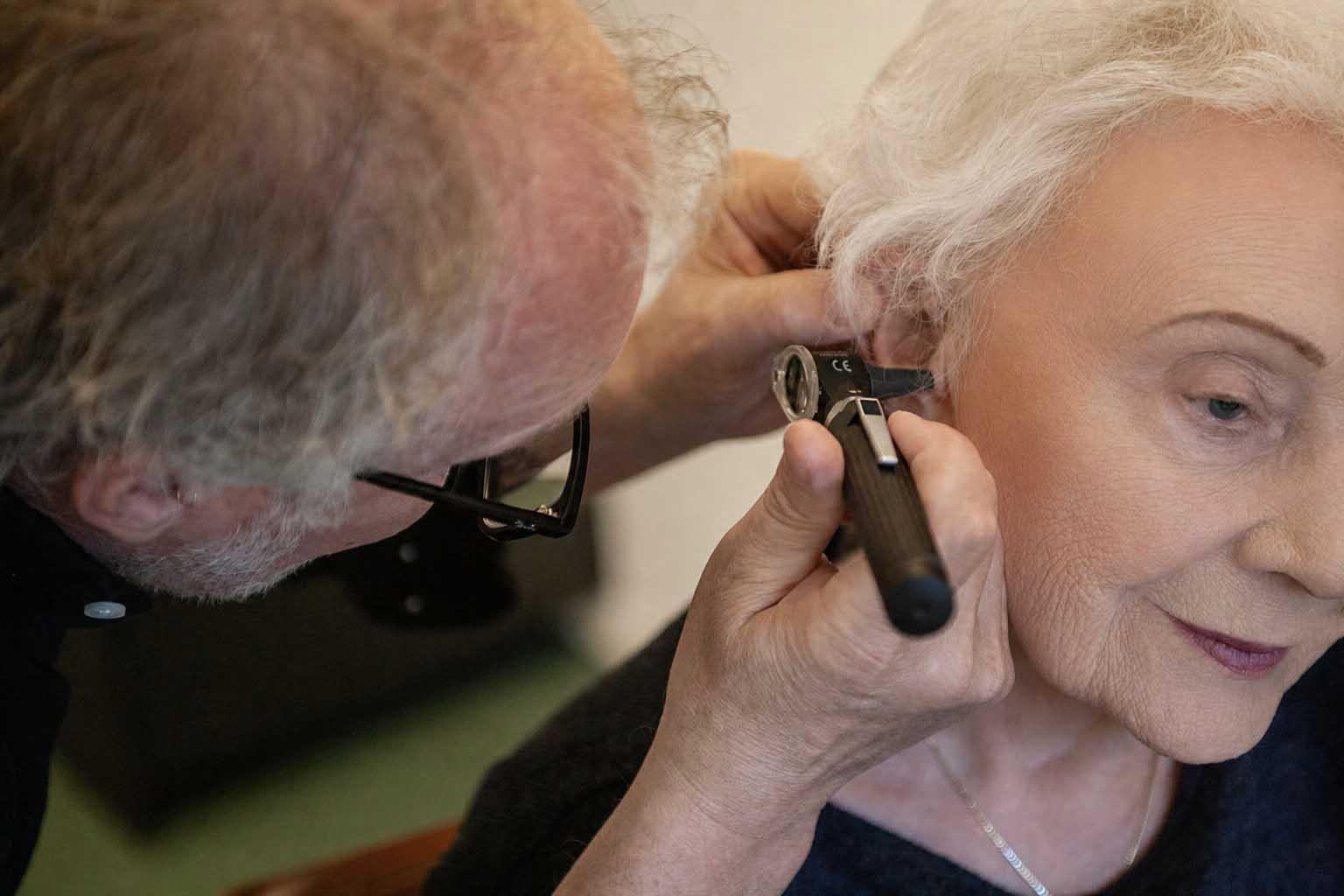
Our ENT specialists then examine the ear canal and eardrum, including photographic documentation of the eardrum. This is followed by a series of audiological tests, which may include pure-tone audiometry, speech audiometry and assessment of middle ear function, depending on the nature of the problem. We use a range of testing methods to achieve the highest possible level of diagnostic accuracy.
These examinations provide all the necessary information for our ENT specialists to refer directly for hearing aid treatment, should this be appropriate and desired by the patient.
The most important part of the process is the interpretation of the findings from both the assessments and the consultation. The goal is not simply to establish that hearing loss exists, but to understand the difference between what can be measured clinically and what the individual experiences in daily life.
Some patients may have mild to moderate hearing loss yet experience significant communication difficulties. Others may have more substantial hearing loss but relatively few subjective concerns. This is why personalised audiological counselling is often more effective than a standardised approach in which everyone receives the same explanation and the same solution.
We consider thorough assessment at this stage to be essential, as it forms the foundation for achieving the most accurate and successful hearing aid fitting possible.
Modern hearing aids are sophisticated medical devices. They do far more than simply amplify sound. Today's hearing aids are designed to compensate for hearing loss, reduce background noise, improve speech clarity through directional microphone technology, manage feedback, and in many cases provide wireless connectivity via technologies such as Bluetooth and LE Audio. All of these features are intended to support better speech understanding in everyday listening environments.
However, the most important point is that the hearing aid itself is only one part of the treatment process. Successful outcomes depend just as much on the quality of the assessment, the choice of hearing solution, the fitting process, ongoing fine-tuning and long-term follow-up care.
A successful hearing aid journey is therefore not simply about being given a device. It is about finding a solution that matches the individual's hearing profile, ear anatomy, ability to manage the technology, listening requirements and personal expectations. NICE guidelines emphasise the importance of patient information, individual choice and appropriate follow-up after fitting.
For many patients, it is the fitting process and subsequent fine-tuning that determine the difference between a mediocre experience and a successful outcome. This is where the hearing aids are adjusted to the individual's needs, helping to maximise speech understanding, listening comfort and overall satisfaction with treatment.
In Denmark, anyone with clinically significant hearing loss is entitled to receive hearing aids either through the public healthcare system or through an approved private provider with public funding support. According to the Danish public authorities, patients are generally free to choose between these options, provided the hearing loss meets the criteria for treatment. Certain complex or highly specialised hearing conditions may still require assessment and management within a hospital-based audiology department.
For many people, the public solution is both appropriate and effective. Private hearing care is often chosen by those who value greater flexibility, shorter waiting times, a wider range of hearing aid options and a more personalised treatment experience.
At Rhino Hearing Clinic, our aim is to provide a more individualised and comprehensive audiological journey for patients who want that level of care. For some, it is important to have sufficient time to discuss workplace communication challenges, music appreciation, telephone conversations, restaurant environments or the demands that hearing difficulties can place on an active social life.
A private clinic can often offer greater continuity of care, a calmer environment and more opportunity to fine-tune hearing aids over time. It also allows more time for practical guidance when hearing aids are fitted, including installation, device setup and training in the use of smartphone apps and other connectivity features that help patients get the most from their hearing aids.
In 2026, public funding for hearing aids is available at up to DKK 4,497 for the first ear and up to DKK 2,437 for the second ear. These amounts are typically reviewed and adjusted approximately every two years.
As a general rule, patients are eligible for new public hearing aids or renewed public funding after four years, unless special circumstances apply.
Recipients of the Danish State Pension and individuals awarded a disability pension before 2003 may, in certain cases, also be eligible to apply for additional healthcare benefits (Helbredstillæg) through their local municipality.
In addition, Sygeforsikringen “danmark” offers financial support for hearing aids purchased in Denmark through an approved private hearing care provider. The amount available depends on the member's category and length of membership. According to the organisation's current rules, specific annual reimbursement limits apply, and higher levels of support may be available for members who have remained in the same membership group for an extended period.
For this reason, funding options should always be reviewed on an individual basis to ensure complete transparency regarding the overall cost of treatment.
At Rhino Hearing Clinic, we help patients understand the funding opportunities available to them and explain how public subsidies and any additional benefits may be combined. Our aim is to ensure that every patient has a clear understanding of the financial aspects of treatment before making a decision.
The short answer is: earlier than most people think.
The longer hearing difficulties go unaddressed, the greater the risk that they become an accepted part of everyday life, gradually affecting energy levels, relationships and overall quality of life. Many people only seek help when their partner becomes more frustrated than they are, or when hearing difficulties begin to affect their performance at work. While this is understandable, it is rarely ideal.
A much better approach is to have your hearing assessed early and establish whether there is a clinically significant hearing loss, a need for hearing aids, a need for medical investigation, or simply a need for professional advice and reassurance.
A hearing assessment is not a commitment to treatment. It is a professional evaluation that provides the information needed to make an informed decision about your hearing health.
At Rhino Hearing Clinic, we take a patient-centred approach grounded in clinical expertise and thorough audiological care.
For patients from Hellerup, Østerbro, Frederiksberg, Gentofte, Charlottenlund, Klampenborg, Vedbæk, Rungsted, Hørsholm and across Nordsjælland, our goal is to provide a hearing care journey that reflects the realities of everyday life. We believe that hearing should always be understood within the context of how a person lives, works and communicates.
This means that our recommendations and hearing aid fittings are based on far more than test results alone. They are based on understanding the individual behind the hearing assessment, their listening needs, their lifestyle and the challenges they experience in everyday situations.
How do I know whether I have hearing loss that requires treatment or whether I need hearing aids?
If you frequently misunderstand speech, feel tired after listening, or experience noticeable difficulties hearing in noisy environments, it is a good idea to have your hearing assessed.
Do you only need hearing aids if you have significant hearing loss?
No. Many people benefit greatly from hearing aids even with mild to moderate hearing loss, particularly when speech understanding is affected in everyday situations.
Can I choose private hearing care with public funding?
Yes. In many cases, you can choose an approved private hearing care provider and still receive public funding, provided the relevant eligibility criteria are met. This includes treatment at Rhino Hearing Clinic.
Will hearing aids restore my hearing to normal?
No. Hearing aids do not restore normal hearing. However, they can often significantly improve speech understanding, reduce listening effort and provide a substantial improvement in everyday communication and quality of life.
Aren't hearing aids only for older people?
No. While age-related hearing loss becomes increasingly common after the age of 60, there are many other reasons why someone may benefit from hearing aids. Some people experience hearing difficulties due to tinnitus, noise exposure or relatively mild hearing loss that nevertheless affects their daily life.
Even a small improvement in hearing can make a significant difference to communication, listening comfort and overall quality of life.
This article has been clinically reviewed by Lars-Bo Kjær, BA Audiology (University of Southern Denmark), Audiologist at Rhino Hearing Clinic.
World Health Organization (WHO): Deafness and hearing loss, 2023, https://www.who.int/news-room/fact-sheets/detail/deafness-and-hearing-loss
Livingston et al., Dementia prevention, intervention, and care: 2020 report of the Lancet Commission, 2020, https://doi.org/10.1016/S0140-6736(20)30367-6
NIH/NIA: ACHIEVE Study, 2023, Hearing intervention versus health education control to reduce cognitive decline in older adults with hearing loss in the USA (ACHIEVE): a multicentre, randomised controlled trial, https://doi.org/10.1016/s0140-6736(23)01406-x Epub 2023 Jul 18
NICE Guidelines (National Institute ofor Health and Care Excellence: Hearing loss in adults, 2018, https://www.ncbi.nlm.nih.gov/books/NBK11822/
Sundhedsstyrelsen: Høreapparatbehandling i Danmark
Borger.dk: Tilskud til høreapparater (2026)
Livingston et al., Dementia prevention, intervention, and care- 2024 report of the Lancet standing Commission DOI: 10.1016/S0140-6736(24)01296-0
Levett et al., 2025, Hearing impairment and dementia: cause, catalyst or consequence https://doi.org/10.1007/s00415-025-13140-x
Huang et al., Hearing Loss and Dementia Prevalence in Older Adults in the US,( JAMA, Published Online: January 10, 2023, 2023;329;(2):171-173., doi:10.1001/jama.2022.20954
Kolo et al., 2025, Hearing Loss, Brain Structure, Cognition, and Dementia Risk in the Framingham Heart Study.,( JAMA Netw Open, Published Online: November 5, 2025, 2025;8;(11):e2539209. doi:10.1001/jamanetworkopen.2025.39209
Griffiths T. D., 2020, How Can Hearing Loss Cause Dementia, https://doi.org/10.1016/j.neuron.2020.08.003

Hearing aid treatment may be appropriate if you experience hearing loss, difficulty understanding speech or tinnitus in everyday life. At Rhino Hearing Clinic in Hellerup, we offer comprehensive hearing assessments, specialised diagnostic evaluations and modern hearing aids tailored to your hearing loss and individual needs.
In Denmark, anyone with hearing loss that requires treatment is entitled either to receive hearing aids through the public healthcare system or to choose an approved private provider with public funding support.
In 2026, public funding for hearing aids is available at up to DKK 4,497 for the first ear and up to DKK 2,437 for the second ear. These amounts are typically reviewed and adjusted approximately every two years. As a general rule, patients become eligible for new public hearing aids or renewed public funding after four years, unless special circumstances apply. State pension recipients and individuals awarded a disability pension before 2003 may, in certain cases, also be eligible to apply for additional healthcare benefits through their local municipality.
At Rhino Hearing Clinic, we also provide guidance on public funding for hearing aids and the treatment options available within a specialised Ear, Nose and Throat (ENT) environment as an integrated part of Rhinoklinikken Private Hospital.
In addition, Sygeforsikringen “danmark” offers financial support for hearing aids purchased in Denmark through an approved private hearing care provider. The amount available depends on the member’s category and length of membership. According to the organisation’s current rules, specific reimbursement limits apply within a 12-month period, and higher levels of support may be available for members who have remained in the same membership group for an extended period.
For this reason, funding options should always be reviewed individually so that patients have a clear understanding of the overall financial aspects of treatment.
Contact us
If you would like to know more about the surgery or are interested in a no-obligation consultation about your options, you are welcome to contact us via the contact form here.
Contact